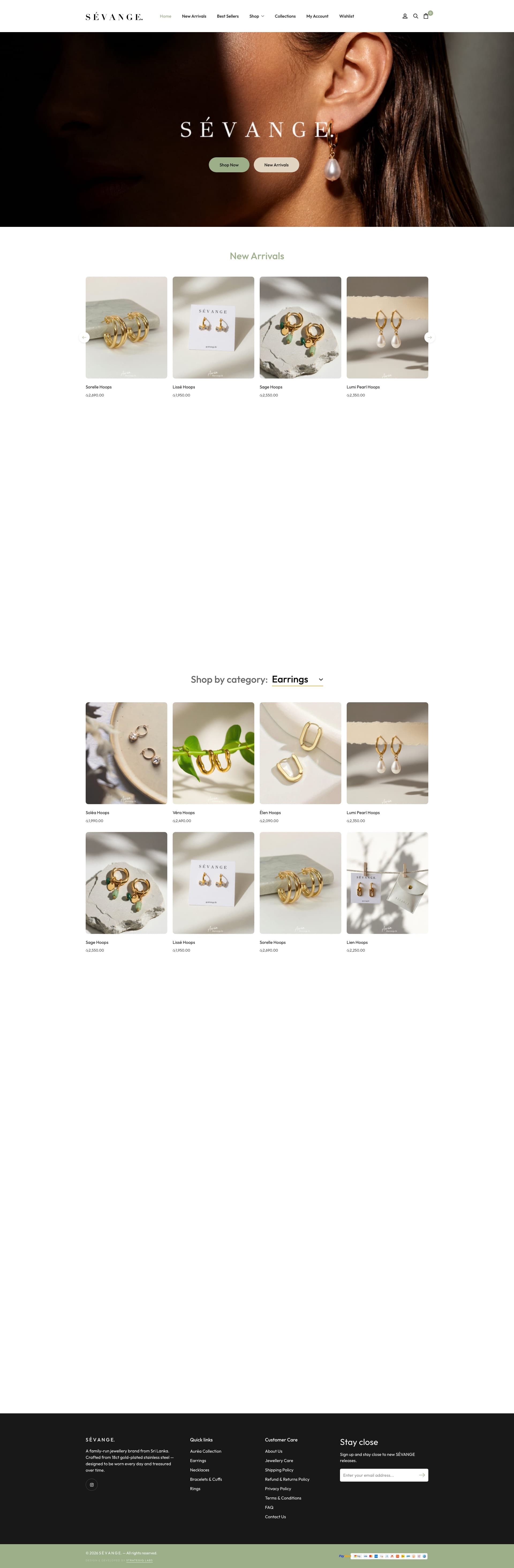

E-Commerce
Platforms.
Storefronts judged on revenue per session, not page count. We work the whole path — catalogue structure, product pages, checkout latency, and the post-purchase flow — because the drop-off is rarely where people assume it is.
- Checkout target
- < 500ms
- Best completion lift
- +41%
- Weeks typical
- 8–14
- Compliant flows
- PCI
The
Capabilities.
Six areas of work. On a typical engagement we lead with two or three and keep the rest available as the programme develops.
Catalogue architecture
Taxonomy, variants, and faceted navigation modelled so search and filtering stay fast as the catalogue grows.
Product pages
The page that does the selling: media, specification, stock truth, delivery expectation, and social proof in the order people ask for them.
Checkout engineering
Fewer steps, no micro-redirects, edge-rendered. Every redirect between cart and confirmation is measured and removed where possible.
Payments & tax
Local and international gateways, multi-currency, and tax rules that hold up across the regions you actually ship to.
Post-purchase
Order confirmation, fulfilment status, returns, and the email sequence — the part of the funnel that produces repeat revenue.
Merchandising tooling
Controls your team can operate without a developer: collections, badges, promotions, and campaign landing pages.
How It
Runs.
Five stages, each ending in something you can hold — a document, an environment, a live deployment. No stage closes on a status update alone.
Funnel teardown
We instrument the current funnel and find where sessions actually die — usually not the step the analytics dashboard implies.
You receiveFunnel analysis, drop-off map, prioritised opportunity list
Catalogue & content model
Products, variants, collections, and attributes defined once, so filtering, search, and feeds all read from the same structure.
You receiveCatalogue schema, migration plan, feed specification
Storefront build
Product and collection templates first — they carry the traffic. Then cart, checkout, and account.
You receiveStaging storefront, template library, admin walkthrough
Checkout & payments
Gateway integration, tax and shipping rules, and latency work against the sub-500ms target end to end.
You receiveLive payment flows, latency report, test order suite
Launch & optimise
Cutover with the old URLs redirected, then a testing programme against revenue per session rather than raw conversion rate.
You receiveLive store, redirect map, ongoing test backlog
What lands in your hands
- Storefront across all breakpoints
- Catalogue schema and data migration
- Checkout with local and international payments
- Multi-currency and tax configuration
- Product feeds for search and social
- Post-purchase email sequence
- Merchandising controls for your team
- Revenue and funnel dashboards
Asked before we start
- Shopify, WooCommerce, or custom?
- Shopify when you want to stop thinking about infrastructure. WooCommerce when you're already on WordPress and the catalogue is modest. Custom only when your model genuinely doesn't fit either — it rarely does, and we'll say so.
- Can you migrate our existing store?
- Yes, including products, customers, order history, and URLs. The redirect map is part of the deliverable — migrations lose rankings when it isn't.
- How do you measure success?
- Revenue per session, not conversion rate. Conversion rate can rise while revenue falls; we agree the metric before we start.
Selected
Work.
Projects where this service carried the outcome.
View the archive